Short answer: before you chase the client, check your side first: was the invoice actually sent, and did it arrive? Then check the due date in the contract. Only then send a short, friendly reminder with the invoice attached. A late payment is not always the client's delay.
When the delay was mine
A recurring $1,200/month client once went quiet on payment for almost a month. The contract said payment would be processed on invoice receipt, but I had wrapped up that month's deliverables over Slack and never sent the invoice. Two weeks of silence felt like normal international payment lag, until a one-line reply ("Invoice not received") made it obvious the delay was entirely mine. By the time I sent it, it was processed, and the transfer landed, a payment that should have taken about two weeks took closer to six.
Now invoice-sending is tied to delivery instead of being a separate step I trust myself to remember, and I keep a running list of what has been sent. The invoicing side of this is covered in our guide to invoicing software for international freelancers.
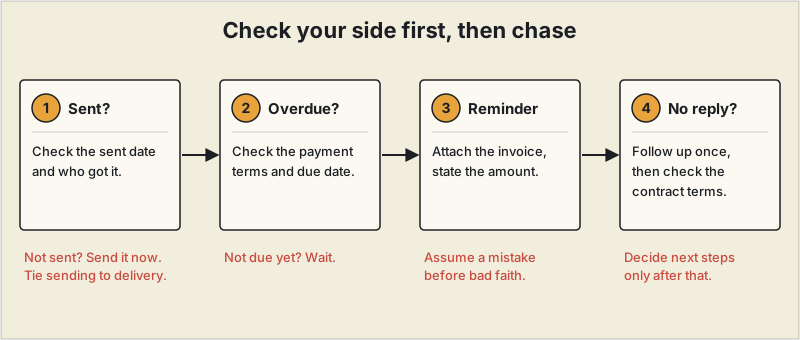
The order I would check things in
- Was the invoice sent, and received? Check the sent date and the address it went to. If it never went out, send it now.
- Is it actually overdue? Look at the payment terms in the contract. "Net 30" and "on receipt" are very different deadlines, and the clock starts when the client receives the invoice.
- Send a short reminder. Attach the invoice, state the amount and the due date, and ask whether anything is blocking payment. Assume a mistake before you assume bad faith.
- Follow up once more, then check the contract. If a second reminder gets no answer, read what the contract says about late payment before you decide what to do next.
What I changed afterwards
I used to rely on my memory for when to send an invoice. When work piled up at the end of the month, I sometimes finished a delivery and forgot to send the invoice. Now my project page in Notion has four date fields: delivery date, invoice date, expected payment date, and payment confirmed date. When a delivery is finished I create an invoice task, and I check again around the expected payment date.
Once, when an invoice of mine went out late, I wrote to the client along these lines (a translation of what I wrote): "I'm sorry the invoice for the recent delivery was late. I've attached it, so please have a look. Could you also confirm the payment date?" What I took from it is not to mix up two different problems: the client paying late, and my own invoicing being late.
This is general information, not legal advice. Late fees and collection steps depend on your contract and where you and your client are based.
Frequently asked questions
How long should I wait before sending a payment reminder?
Once the due date has passed, a short reminder the next business day is reasonable. Many late payments are simply missed or misrouted invoices.
Can I charge a late fee?
Only if your contract provides for it, and rules vary by country and by type of client. This is general information, not legal advice, so check your contract or ask someone qualified.
What if a client keeps paying late?
Consider shorter payment terms, a deposit, or invoicing on delivery instead of at month end, and whether the client is a good fit. The right choice depends on how much the relationship is worth to you.